
When patients come to us for their first consultation, they often say, “I just want to get rid of my wrinkles.” In reality, however, wrinkles are only one of many visible signs of ageing.
Modern aesthetic medicine takes a much more comprehensive view of the ageing process. As we age, we don’t simply lose collagen. The quality of the skin changes, subcutaneous fat gradually diminishes, the facial retaining ligaments weaken, and even the underlying facial bone structure evolves over time. These changes can result in tissue sagging, volume loss, weakened facial contours, and the development of wrinkles.
This is precisely why there is no single rejuvenation treatment that works for everyone. A patient with fine lines requires a completely different approach from someone experiencing sagging cheeks or significant facial volume loss.
At Nobbles Clinique, every treatment begins with a comprehensive facial assessment to identify the patient’s dominant ageing pattern. Only then do we create a personalised treatment plan that respects the natural proportions of the face and delivers harmonious, natural-looking results.
Why Does the Face Age?
Ageing is a natural biological process that affects every layer of the face.
The most important changes include:
- reduced collagen and elastin production,
- declining levels of hyaluronic acid,
- loss of subcutaneous fat,
- changes in the facial bone structure,
- long-term UV exposure,
- genetic predisposition,
- lifestyle factors, including smoking and chronic stress.
Facial ageing does not occur in the same way for everyone. Differences in underlying biological processes result in several distinct patterns of facial ageing.

1. Wrinkled Ageing Pattern
How to Recognise It
This ageing pattern is characterised mainly by changes in skin quality rather than significant tissue sagging.
Typical features include:
- numerous fine lines,
- dry, thin skin,
- reduced elasticity,
- visible wrinkles around the eyes and mouth,
- minimal tissue descent.
This pattern is more commonly observed in individuals with fair skin and those with a history of extensive sun exposure. Although facial contours often remain well defined, the skin appears older, duller, and more fatigued.
Which Treatments Work Best?
For the wrinkled ageing pattern, treatment focuses on restoring skin quality, stimulating collagen production, and providing deep hydration. The goal is not simply to smooth wrinkles, but to improve the overall structure, firmness, and health of the skin.
The most effective treatments include:
- Polynucleotides – Recognised as one of the most advanced regenerative treatments in aesthetic medicine, polynucleotides support cellular repair while enhancing skin hydration, elasticity, and overall quality. They are particularly suitable for patients with thin, dry, or sun-damaged skin.
- Skinboosters – Skinboosters contain stabilised hyaluronic acid that is injected into the superficial layers of the skin. Unlike traditional dermal fillers, they do not add volume but instead provide deep hydration, improve elasticity, and restore the skin’s natural radiance.
- Sculptra® – Sculptra® is a biostimulatory treatment that encourages the body to produce its own collagen. Results develop gradually over several months, leading to firmer skin, improved skin density, and a visible reduction in fine lines.
- Radiesse® – Radiesse® combines an immediate lifting effect with long-term collagen stimulation. It is particularly suitable for patients who wish to improve skin quality while subtly restoring structural support to ageing tissues.
- Laser Skin Resurfacing – Laser resurfacing treatments remove damaged layers of skin while stimulating the production of new collagen. They effectively reduce fine wrinkles, improve skin texture, and minimise the visible signs of photoageing.
What Is Most Important for This Ageing Pattern?
The best results are achieved through a combination of intensive hydration, skin regeneration, and collagen stimulation. Rather than adding unnecessary volume, the aim is to gradually restore skin quality, density, elasticity, and overall vitality.
2. Ptotic (Gravitational) Ageing Pattern
How to Recognise It
In this type of ageing, the primary concern is not wrinkles but the effects of gravity on facial tissues.
Typical signs include:
- a less defined jawline,
- the appearance of jowls,
- deepening nasolabial folds,
- loss of the youthful V-shaped facial contour,
- marionette lines,
- sagging skin on the neck.
Patients often tell us that they look tired, sad, or even angry, despite feeling perfectly well.
Which Treatments Work Best?
For the gravitational ageing pattern, treatment should primarily address tissue descent and the loss of facial definition. Simply softening wrinkles rarely produces a satisfying result. Instead, the focus is on lifting, repositioning, and strengthening facial tissues.
- Ultherapy PRIME® – Ultherapy PRIME® uses focused ultrasound energy to stimulate collagen production deep within the skin and supporting tissues. The treatment tightens the skin and provides a natural lifting effect without surgery.
- APTOS Thread Lift – APTOS absorbable threads provide an immediate lifting effect while also stimulating collagen production. As the threads gradually dissolve, skin firmness and quality continue to improve. The result is a naturally rejuvenated appearance, enhanced jawline definition, and smoother facial contours—without the need for surgery.
- FaceTite® – FaceTite® is a minimally invasive radiofrequency-assisted treatment designed to tighten the skin and remodel facial contours. It is particularly effective for sagging cheeks, the jawline, and the area beneath the chin.
- Structural Support with Hyaluronic Acid Fillers – When key structural support points of the face have weakened due to ageing, strategically placed hyaluronic acid fillers can restore facial proportions and provide support where volume has been lost. The result is a more youthful and balanced appearance while maintaining natural facial harmony.
- Surgical Facelift (for Advanced Ageing) – For patients with significant tissue laxity, a surgical facelift may provide the most effective and long-lasting solution. Modern techniques, including the Deep Plane Facelift and Neck Lift, allow surgeons to achieve natural-looking rejuvenation without creating an overly tight or artificial appearance.
What Is Most Important for This Ageing Pattern?
Treating wrinkles alone is not enough. The priority is to restore structural support and tissue firmness so that the face regains its natural contours. For this reason, lifting and skin-tightening treatments typically deliver the most effective and natural-looking results.
3. Atrophic (Volume Loss) Ageing Pattern
How to Recognise It
The defining feature of this ageing pattern is the gradual loss of facial volume.
Typical characteristics include:
- hollow cheeks,
- volume loss in the temples,
- dark circles and hollowing beneath the eyes,
- more prominent bony facial contours,
- a tired, hollow appearance.
In recent years, this phenotype has become increasingly common among patients following significant weight loss or as part of the so-called “Ozempic face” phenomenon.
Which Treatments Work Best?
In the atrophic ageing pattern, the primary issue is not wrinkles or tissue sagging but volume depletion. Treatment therefore focuses on restoring lost volume while regenerating facial tissues.
- Fat Grafting (Autologous Fat Transfer) – Fat grafting uses the patient’s own fat cells to restore lost facial volume. In addition to volumisation, transferred fat provides regenerative benefits thanks to the stem cells naturally present within adipose tissue. Fat grafting is frequently combined with facelift surgery to achieve the most natural and long-lasting rejuvenation.
- Hyaluronic Acid Fillers – Hyaluronic acid fillers allow precise restoration of volume in areas such as the cheeks, temples, and tear troughs. Results are visible immediately and can dramatically refresh the overall appearance while preserving natural facial proportions.
- Sculptra® – Sculptra® stimulates the body’s own collagen production, gradually restoring facial volume in a subtle and natural way. It is particularly suitable for patients who prefer progressive rejuvenation without dramatic changes or downtime.
- Radiesse® – Radiesse® helps restore volume while simultaneously improving skin quality through collagen stimulation. It is frequently used in patients showing the early signs of volume-related facial ageing.
What Is Most Important for This Ageing Pattern?
When volume loss is the dominant concern, restoring it naturally becomes the primary objective. Properly performed volumisation can restore youthful facial proportions, refresh the appearance, and create a well-rested look without making the face appear overfilled or unnatural.
4. Muscular Ageing Pattern
How to Recognise It
The muscular ageing pattern is primarily caused by repetitive facial expressions and the continuous activity of the facial muscles.
The most common signs include:
- forehead lines,
- frown lines (glabellar lines),
- periorbital wrinkles,
- deeper dynamic expression lines.
Initially, these wrinkles appear only during facial movement. Over time, however, they gradually become static wrinkles that remain visible even when the face is at rest.
Which Treatments Work Best?
In the muscular ageing pattern, wrinkles develop mainly as a result of repeated contractions of the facial expression muscles. The primary goal of treatment is to reduce excessive muscle activity and prevent wrinkles from becoming deeper over time.
The most effective treatment options include:
- Botulinum Toxin Injections – Botulinum toxin is considered the gold standard for treating dynamic wrinkles. It temporarily relaxes selected facial muscles, softening forehead lines, frown lines, and periorbital wrinkles. When performed correctly, treatment preserves natural facial expressions while creating a fresher, more rested appearance.
- Skin Quality Enhancement with Biostimulators and Skinboosters – Even in patients whose primary concern is muscular ageing, maintaining healthy skin is essential. Treatments such as Sculptra®, Radiesse®, skinboosters, and polynucleotides stimulate collagen production, improve skin quality, and complement the effects of botulinum toxin.
What Is Most Important for This Ageing Pattern?
Prevention plays a crucial role. Early treatment of excessive muscle activity can significantly slow the development of deep expression lines, helping patients maintain a natural, youthful, and well-rested appearance for many years.
Combined Ageing Pattern – The Most Common Presentation
In clinical practice, very few patients fit neatly into a single ageing category. Most present with a combination of several ageing patterns, with one usually being dominant.
The most common combinations include:
- Wrinkled–Ptotic Pattern – fine lines combined with tissue sagging.
- Atrophic–Ptotic Pattern – volume loss accompanied by tissue descent.
- Muscular–Wrinkled Pattern – pronounced expression lines accompanied by a decline in skin quality.
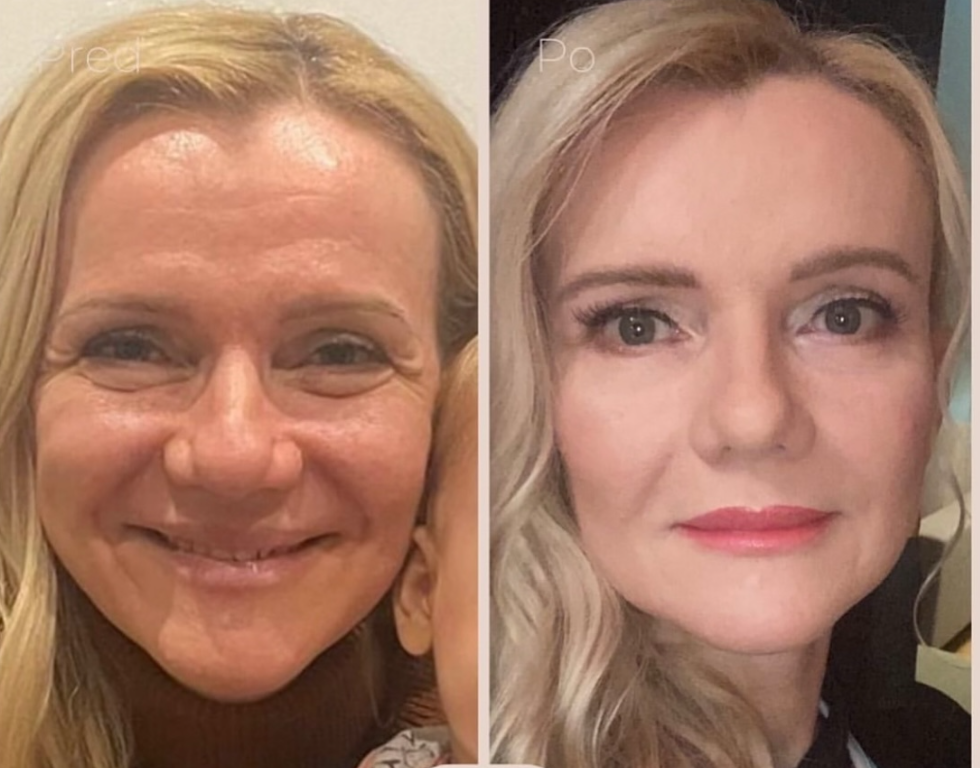
This is why choosing a treatment based solely on a single wrinkle or an inspiring before-and-after photo found online is rarely the right approach. Every face ages differently and therefore requires an individual treatment strategy.
For example, one patient with facial sagging may benefit most from Ultherapy PRIME®, while another may achieve better results through collagen stimulation with Sculptra® or carefully planned facial volumisation.
Modern facial rejuvenation rarely relies on a single procedure. The most natural and long-lasting outcomes are typically achieved by combining several complementary treatments—for example:
- biostimulators to improve skin quality,
- volumising treatments to restore lost facial volume,
- lifting technologies to tighten and support ageing tissues.
A personalised treatment plan allows multiple aspects of facial ageing to be addressed simultaneously, producing harmonious, natural-looking results rather than an artificial or overtreated appearance.
We Don't Treat Wrinkles—We Treat the Ageing Process
The best aesthetic outcomes are not achieved by removing a single wrinkle. They come from understanding why the face ages the way it does.
Accurate diagnosis of the patient’s ageing pattern allows us to select treatments that address the true underlying causes—whether that is collagen loss, volume depletion, tissue laxity, or excessive muscle activity.
At Nobbles Clinique, every patient receives an individualised treatment plan based on facial anatomy, skin quality, and the natural ageing process.
Our goal is not to change your face.
Our goal is to help you look like the best, fresher, and more rested version of yourself.
Would you like to find out which ageing pattern applies to you? Book a consultation at Nobbles Clinique and let us prepare your personalised facial rejuvenation plan.
Frequently Asked Questions (FAQ)
How can I determine my facial ageing pattern?
The most accurate assessment is made during a personal consultation, where your doctor evaluates your skin quality, facial volume, muscle activity, and the degree of tissue laxity.
Can I have more than one ageing pattern?
Yes. Most patients display a combination of several ageing patterns, although one is usually more dominant than the others.
At what age should I start rejuvenation treatments?
Preventive treatments often begin between the ages of 30 and 35, although the ideal timing depends on your genetics, skin quality, and individual ageing pattern.
Is Sculptra® better than hyaluronic acid fillers?
The two treatments serve different purposes. Sculptra® stimulates your body’s own collagen production and provides gradual, natural-looking rejuvenation, while hyaluronic acid fillers restore facial volume immediately. The most suitable option depends on your individual ageing pattern and treatment goals.
When is Ultherapy PRIME® recommended?
Ultherapy PRIME® is ideal for patients showing early signs of tissue laxity and reduced skin firmness, particularly in the cheeks, jawline, and neck.
What is the difference between a biostimulator and a dermal filler?
A dermal filler restores volume immediately, whereas a biostimulator encourages your body to produce its own collagen, with results developing gradually over time.